
What DDEA Delivers
DDEA produces tangible, adoptable artifacts — not frameworks that sit on shelves. Every working group output is designed for direct use by program offices, prime contractors, and systems integrators navigating the DoD digital engineering landscape.
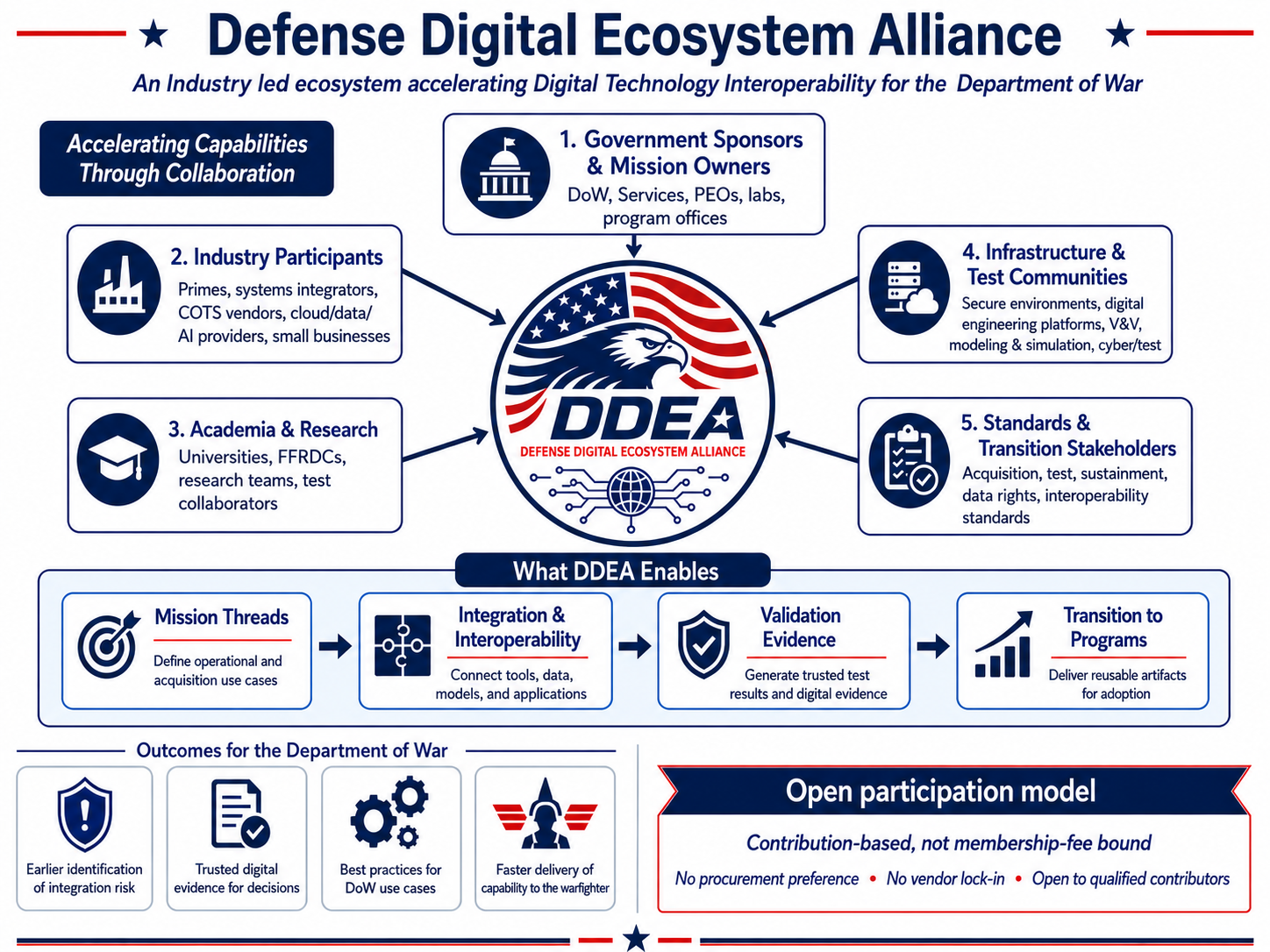
From Working Group to Program Office
DDEA convenes member organizations to solve specific, recurring interoperability problems in defense acquisition. Our outputs are consensus-built, standards-aligned, and validated against real program environments — so adopters spend time integrating capability, not reinventing it.
Mission Thread Integration
End-to-end digital thread traceability across the acquisition lifecycle
DDEA develops mission thread integration profiles that define how requirements, design models, simulation results, test evidence, and sustainment data connect across tools and organizational boundaries. These profiles enable program offices to establish authoritative digital threads without mandating a single toolchain.
Key Outcomes
- Standardized data exchange interfaces between PLM, MBSE, and simulation environments
- Traceability from operational requirements through verification evidence
- Reduced integration cost when onboarding new contractors or tools
- Alignment with DoD Digital Engineering Strategy objectives
Interoperability Profiles
Tool-agnostic data exchange standards for defense digital ecosystems
Interoperability profiles define the minimum data exchange requirements between specific tool categories — MBSE to simulation, PLM to test management, digital twin to sustainment systems. Profiles are developed through working groups, validated by member organizations, and published for open adoption.
Key Outcomes
- Documented interface contracts between tool categories
- Reduced vendor lock-in through open, standards-based exchange formats
- Faster onboarding of new tools into existing digital ecosystems
- Contribution pathways to recognized standards bodies (NIST, ISO, OMG)
Validation Evidence Packets
Structured evidence that digital engineering approaches meet program requirements
Validation Evidence Packets (VEPs) provide structured documentation that a digital engineering approach — a tool, workflow, or integration pattern — has been validated against defined criteria. VEPs give program offices the evidence they need to accept digital artifacts as authoritative sources of truth.
Key Outcomes
- Structured validation evidence acceptable to government program offices
- Reduced time-to-acceptance for digital engineering deliverables
- Reusable validation frameworks across similar program types
- Alignment with OUSD(R&E) digital engineering acceptance criteria
Acquisition Transition Playbooks
Step-by-step guidance for adopting digital engineering in active programs
Acquisition Transition Playbooks translate digital engineering concepts into actionable implementation guidance for specific program phases — from Milestone A through full-rate production. Each playbook addresses contracting language, data rights, tool qualification, and workforce considerations.
Key Outcomes
- Phase-specific implementation guidance for program managers
- Model contract language for digital engineering data deliverables
- Workforce and training considerations for digital thread adoption
- Risk mitigation strategies for digital engineering transitions
From Problem to Published Output
Problem Identification
Member organizations and government partners identify recurring interoperability pain points in active programs. Working group topics are prioritized by member vote.
Working Group Formation
A working group is chartered with a defined scope, deliverable, and timeline. Any member organization can participate; a charter member or qualified general member chairs.
Consensus Development
Working groups develop draft profiles, VEPs, or playbooks through structured technical sessions. All member organizations have review and comment rights.
Validation & Publication
Outputs are validated against real program environments by member organizations before publication. Published artifacts are freely available to the defense community.
How Organizations Participate
DDEA membership is structured to accommodate organizations of all sizes — from large defense primes to boutique consultancies and university research centers. Contribution drives influence: working group participation, not dues tier, determines how much your organization shapes DDEA outputs.
Charter Member
Organizations that helped establish DDEA and have committed to sustained working group leadership. Charter members have board representation and shape the technical roadmap.
- Board of Directors representation
- Working group chair eligibility
- Early access to all published profiles and playbooks
- Co-branding on DDEA publications and events
- Priority government engagement opportunities
General Member
Organizations contributing technical expertise, validation resources, or implementation experience to DDEA working groups. Full access to all published outputs.
- Full working group participation rights
- Access to all published profiles, VEPs, and playbooks
- Voting rights on technical outputs
- DDEA member recognition and co-marketing
- Government engagement through DDEA channels
Government Partner
DoD program offices, PEOs, and government laboratories participating as non-voting observers and early adopters of DDEA outputs.
- Observer status in all working groups
- Early access to draft profiles and playbooks
- Direct input into working group priorities
- No dues — government participation is free
- Direct liaison to DDEA technical leadership
Ready to Contribute?
Whether you want to adopt DDEA outputs in your program or help shape the next generation of interoperability profiles, we want to hear from you.